
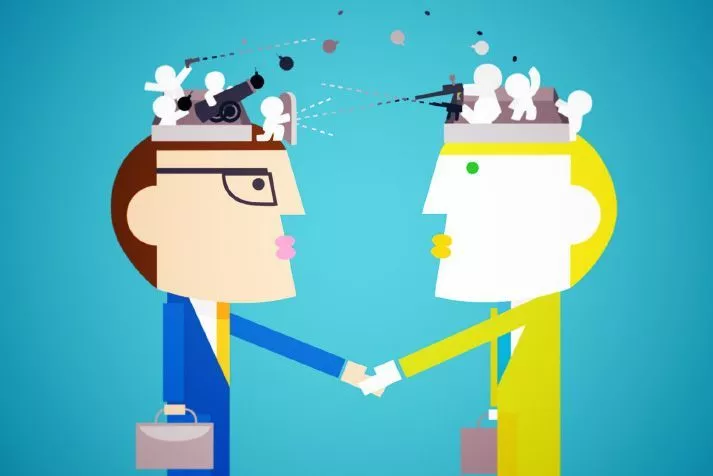
Продължаваме нашия анализ на изкуството да постигаме компромиси както в личния, така и в професионалния си живот. Воденето на успешни преговори изисква не само търпение, но и дълбоко разбиране на психологическите механизми, описани в официалния справочник на Харвардския преговорен проект. Във втората част на този материал ще разгледаме конкретните тактики за справяне в напрегнати ситуации.
It's more important how we speak, not what we say.
A common mistake in negotiations is to rush. If you rush the conversation, the other person will feel like you are not listening. And that does not build trust. Time is one of the most important arguments in negotiations. When you slow down, you actually calm the atmosphere.
When talking, especially when negotiating or arguing, people tend to focus on what they are saying. They don't pay attention to how they are saying it. Words are important, but nonverbal communication plays a crucial role. The overall appearance is very important. If you use words to calm your opponent, but at the same time you show tension because you are nervously tapping your foot, the other person will certainly pay more attention to your behavior. Even if only subconsciously. However, if you smile, you will achieve the opposite effect.
In nonverbal communication, the most important thing is the voice. You can consciously enter the other person's mind and evoke different emotions. Turn distrust into trust or anxiety into calm. There are three main types of voice used in negotiations. The calm voice like a radio host, playful and confident or commanding. However, you will eventually use the latter. Because this is how you declare superiority over your opponent, who will immediately respond with the same. So be positive, speak playfully and smile. When they are positive, people tend to think faster, without chaos in their heads and are inclined to cooperate.
Other negotiation techniques
Negotiations are mostly about having a conversation and building emotional intimacy with your opponent. This helps to establish a connection with the person on the other side, to get them to talk, and to be in tune with them. Repeat the last three words of what the other person says. This will provoke him to turn on his reflexive instinct. And the opponent will keep talking.
Another important point is the pain of the other. Often, opponents, in their quest to understand each other, empathize with each other's pain. And they only need to qualify it. Or, to put it more simply: do not give in to unnecessary emotions. The difficult thing is to separate people from the problem, because it is their emotions that are the problem. When a person is scared, they give in to emotions and communication fails. The key here is not to ignore the emotions of the other party. Instead, get the person opposite you to reveal themselves and influence them. Get them to give a name to their emotion so that they can talk about it without it influencing them. Emotions are an obstacle, not a means of communication. If the other person cannot do it, help them. Reveal their emotions and put them into words. Then calmly present them back to them. This way you show that you understand them and accept their feelings, even if you don't like them. All of this will give you an advantage, especially if the opponent is tense.
When you ask trivial questions like "How is your family?" or you ask him about a colleague, don't just listen to the numbers. Observe his nonverbal communication. Even if they say “Okay,” if their tone is flat or they shuffle their feet nervously, it means that everything is not okay. And when you qualify and describe them with words, use specific expressions. “It seems that…, It sounds as if…, “ These are impersonal phrases. If you say “I heard that…” instead, the personal pronoun automatically raises the other person’s defenses. Using “I” gives the impression that you are more interested in yourself. Finally, when you speak, just shut up. And let the other person talk.
© 2026 Iliana Dechkova