
From "Once upon a time - manners and worldview of the Bulgarians"
The hearth
After the house is ready, half of the rites and religious customs are performed in honor of and around the hearth. In many rites and customs, the hearth replaces the house and the concept of a house. It is no coincidence that in songs, “father's hearth” is often sung instead of “father's house”. The hearth is sacred and no evil can dwell there. It has received this inviolability from the rites and customs that are performed around it. Children are born there, there, by the chimney, the orisniks oris the child. Generations meet by the hearth.
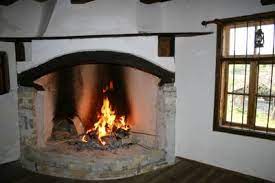 The first thing to do when building a house is to choose fireplace – mandatory to the east. Sometimes it can be in the south, but never in the north or west. If the part of the house where the hearth will be is wide, it is placed in the middle. During construction, when the place is chosen, weeds and herbs are dissolved in water not sung by a priest. This water was then sprinkled on a slab, which was buried in the place designated for the hearth, and the weeds were buried under the slab. Thus, the hearth was protected from all evil forces.
Everything revolves around the hearth first. On Ignazhden, the chicken shumka is raised on the hearth; the groom, upon entering the house, goes straight to the hearth. On Christmas Eve, the Yule log, after being incensed, is placed on the hearth to burn all night. At a wedding, the bride, upon entering the house for the first time, first goes to the hearth to stir the fire. Bayan water is also placed on the hearth, with which the eyes of the person being bewitched are washed. But magic is not performed on the hearth; if a woman tries, the magic is not broken, and evil befalls the woman and the house. Magic is performed only on an empty, or, as they say, a steamed, hearth.
Folklore collection "Once upon a time - manners and worldview of the Bulgarians"
The chimney
It has a very important role in many rituals and religious customs. It is an integral part of the hearth, and it cannot do without it. There are buildings without chimneys – sheepfolds, huts, but they are not houses in the sense of popular belief. The most severe oath is: “May your chimney not smoke!” Emptiness is reflected in the oaths: “where a rooster does not crow, where a dog does not bark, where a chimney does not smoke”.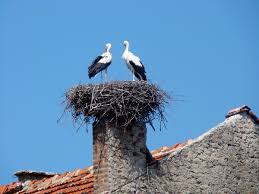
A number of rituals are also performed on the chimney. On St. Andrew's Day, for the health of the bear and for the growth of the days, millet, boiled corn, and beans are thrown through the chimney. The young bride, when she first enters her new home, after stirring the hearth, looks through the chimney. If a child is born during the Dirty Days, between Christmas and Midsummer's Day, so that he does not become a vampire, a cloak is sewn for him on the chimney. Some wedding songs were sung on the chimney when the houses were in the ground. No matter how wide the chimney was, robbers did not dare to pass through it for fear of being caught. No spirits, vampires, or other evil spirits can enter through the chimney. During plague and cholera or other terrible epidemics, people kept the fire burning continuously, because it was believed that the disease could enter through the chimney if the fire was extinguished.
The door
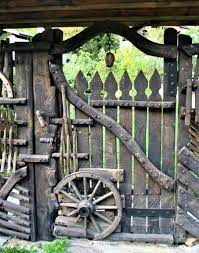 The door through which one enters first is called the old door. Various rituals are performed when they are placed. They become a symbol of the transition from the outer world to the inner one and protect the house, i.e. the household. On Ignazhden, the benefactor, before going to the hearth, first sits behind the door so that the hens can lay eggs and happiness and fertility can sit in the house for the year. When there is an epidemic, the benefactors are hung on the door to stop the epidemic. The mother-in-law meets the new daughter-in-law for the first time in front of the door and blesses her here again. On Christmas Eve, the carolers meet right at the old door. It is forbidden to burn and destroy these doors, because it brings great misfortune.
The threshold
 There are two thresholds: upper and lower. They are integral parts of the door and are sacred. On Easter, red egg shells are glued with cow dung to the upper threshold and remain there until the following year. It is believed that they prevent any illness from entering the house. When the young bride crosses the threshold of her new home for the first time, she will smear the upper threshold with honey and butter so that she will be well with her husband and there will be harmony and prosperity in the family. The lower threshold serves to protect against magic and illness. Herbs are buried there for this purpose. The proverb: “Let the upper threshold hit you so that you can see the lower one” means that when something bad happens to a person, then he gains more experience in life. Nothing is passed through the lower threshold – either you enter or leave. You do not pee on the threshold or behind the door, which is why people protect children so that someone does not make such a mistake. You do not sit on the threshold so that people do not speak badly about the house.
The Waterman
 The waterman is a board on which buckets and kettles of water are placed, or the pegs on which they are hung. The bride, when she first crosses the threshold of her new house, bows to him, because he will be her faithful companion until the grave, and if he forgets to bring water, she will be beaten. On Mishinden, when rites and customs are performed with smearing the eyes of mice, the mud with which the eyes are smeared is taken from the waterman. Beautiful children and girls, so that they will not be cursed, take mud from the waterman and smear their foreheads so that "the world will not look at them". The waterman also has its place in the interpretation of dreams among the old Bulgarians. If you dream that you are washing your hands, you will not achieve what you want. That is where the phrase "I washed my hands" (hands, palms) comes from - it means I have lost hope of achieving what I want. If you dream that you were muddy, dirty and washed yourself, you will get rid of a big trouble or accusation.
The potter
 A cesspool is a pit, a trough, which is considered an unclean place inhabited by spirits, because the scum from the dishes is poured there. Its name comes from the verb "locha", as pigs and dogs scum. Water is also poured there for these animals. If someone sticks their hand in the cesspool, they will get pimples. If you dream of a cesspool with scum - you will quarrel with someone. If you dream that someone is pouring scum on you, expect great anger or your secret will come out.
The pig house
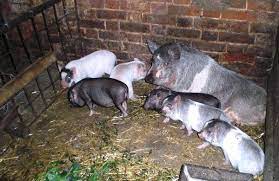 The pigsty is a dwelling for pigs. It is a dirty, unclean place, both literally and figuratively. It is believed that unclean, evil spirits live there. But the pigsty can sometimes be healing. If the bride is not a virgin, her husband has the right to return her to her father. If he leaves her, he must do the following so that she does not bring trouble to the house from her uncleanness: she must roll around in the pigsty and then be taken and bathed in the river, even if it is cold. After that, the bride is now clean and does not pose a danger to the family.
The chicken coop
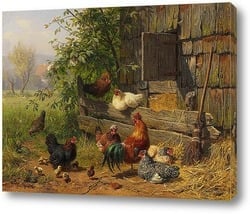 The chicken coop is a dwelling for hens. Like the pigsty, it is an unclean place, a haunt of evil forces. The chicken coop is the place for performing special rituals aimed at curing night-wetting. If a small child pees at night, it was believed that an evil spirit made him do this. For some, this disease remains even when they grow up and are already single and bachelors, and they can hardly get married. Nobody likes scoundrels. That is why such patients were taken to the chicken coop in secret. But in the middle of the night, you don't mess around in the chicken coop for eggs or pee there. It is a great sin to throw garbage from your house into the chicken coop. "Destroy a house - build a chicken coop" is a proverb that refers to a person who is stupid and doesn't know what he is doing. "I'll pile up at least a chicken coop" is said by someone who expresses the most modest wish.
The Woodcutter
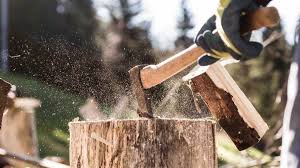 This is the place where they load and cut wood, but also the very stump on which they cut it. On Ignazhden, the first to leave the house must take the noise from the woodcutter and, when he returns to the house, put it in the hearth. Before entering the house, the guest of Ignazhden must pass through the woodcutter and take the noise, with which he will later stir the fire. The Kukeri of Sirni Zagovezni play at the woodcutter, and on Blagovets the lazarki sing their songs there. On Blagovets and Eremia, when noise is made to drive away snakes and lizards, this rite begins and ends at the woodcutter. It is also a sin to urinate on the woodcutter. The ritual of giving birth to the bride is also performed at the woodcutter. If a child cries at night, it is believed that he is sick or possessed by an evil spirit and is taken to the woodcutter to be cured. A fool is a noun for a dull, stupid person.
© 2023 Iliana Dechkova