
В средата на декември се проведе традиционният Коледен концерт на самодейните състави при НЧ „Просвета-1905“, град Аксаково. В празничната програма се включиха местните фолклорни и творчески формации към читалището. Част от събитието беше и соловото изпълнение на Деница Димитрова, която изпя народната песен „Моме, Юрданко“. 🎬 Видео от изпълнението:

Karakonjuli, Navi, Goblins
Many fantastic creatures exist in the pre-Christian beliefs of the Bulgarians. They are either good or bad and have super natural powers. Even when Christianity penetrates deeply into the life of a Bulgarian, he does not give up his old beliefs, but somehow adapts them to Christian beliefs and traditions. More about supernatural beings in our folklore you can…

Ла Бефана и Епифания – La Befana e l’Epifania (с упражнения)
НА 6 януари в Италия празнуват Бефана. Il 6 gennaio in Itaia e’la festa della Befana. В края на календарната година празничният цикъл завършва на 6 януари – Богоявление, а народът казва, че след тази дата празниците си отиват. Терминът „Богоявление“ е от гръцки произход и означава „проявление“; използван е от християнската традиция, за да …
Прочети цялата публикация →„Ла Бефана и Епифания – La Befana e l’Epifania (с упражнения)“

Folkloric regions in Bulgaria - Northern region
Our country is small in terms of territory, but it gathers seven folklore regions, each unique for itself with its own specific features in terms of clothing, music, songs and dances. The Northern folklore region covers the greater part of the Danube plain and the northern part of the Staroplaninska range. To the east it borders the lands of Dobruja, on...
Прочети цялата публикация →„Фолклорни области в България – Северняшка област“

Венеция – Venezia (с упражнения)
Венеция – градът на атракциите – Venezia – la cittá delle attrazioni Венеция е разположена почти цялата в лагуната на Венето и е единственият град в света що се отася до изключитлната му позиция. През 4-5 в., когато варварските орди нападат Италия, жителите на равнината са принудени да потърсят спасение на островите по Адриатика и …
Прочети цялата публикация →„Венеция – Venezia (с упражнения)“

Етруските – Gli Etruschi (с упражнения)
The first inhabitants of the Italian peninsula were the Etruscans, who occupied a large territory between the sea and the rivers Arno and Tevere. They built numerous cities, some of which still exist today: Tarquinia, Arezzo, Perugia, Volterra. From there they began to take new lands to the north and to the south. The Etruscans never managed to create a state. Every city is…
Прочети цялата публикация →„Етруските – Gli Etruschi (с упражнения)“

Folk instruments - BAGGAGE
The bagpipe is a brass and wind instrument. It is found in almost all folklore areas. After the kavala and gudukulka, the bagpipe occupies a worthy place in terms of popularity. It is known even in the ancient culture of Asian countries. Today it is found in almost all European nations. There are three types of bagpipes in Bulgaria - kaba, dzura and Macedonian. The Kaba bagpipe is characteristic...
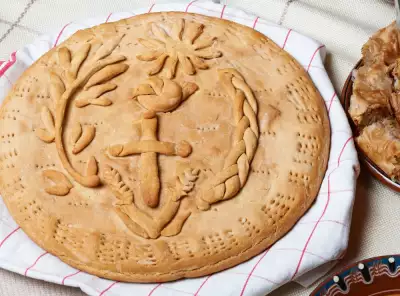
The symbolism in our folk art – BREAD
“No one is greater than bread!” – this old proverb of ours clearly shows the attitude of our people towards bread. It, bread, is not perceived only as food, but as something much more sacred. There is written evidence that bread and wine have been revered in our lands since ancient times. Even in …
Прочети цялата публикация →„Символиката в народното ни творчество – ХЛЯБЪТ“

COUNTING TIME IN THE OLD BULGARIANS - part 1
From "Once upon a time - manners and worldview of the Bulgarians" Since ancient times, people have been afraid of the natural elements. Nature was a mystery to them and the ancients deified it. With the development of civilizations, many gods appeared, guardians of the various natural elements, which instilled terror in the early Christians as well. They also thought...
Прочети цялата публикация →„ОТБРОЯВАНЕ НА ВРЕМЕТО У СТАРИТЕ БЪЛГАРИ – част 1“

Symbolism in our folk art - Stopan
Each house has its own patron, called the owner, domvik or saibiya. It is a house spirit, considered by some to be the spirit of a deceased loved one. It was believed that he was so attached to his home and heirs during his lifetime that after his death he remained in the family house, watching over and caring for...
Прочети цялата публикация →„Символиката в народното ни творчество – Стопан“