"No one is greater than bread!" – this old proverb of ours clearly shows the attitude of our people towards bread. It, bread, is not perceived only as food, but as something much more sacred. There is written evidence that bread and wine have been revered in our lands since ancient times. Even in antiquity, bread was kneaded here, which after baking became double. Herodotus himself was amazed by the fact that the Thracians knew leavened bread, which always doubled in size. Even kings treated their guests to bread and wine. The discovered miniature loaves of clay, buried next to the houses, also speak of a cult towards bread. And when people offered their first fruits as a sacrifice to the gods, they placed them not just anywhere, but in wheat straw.
Bread is the bloodless sacrifice that is always present in the rituals of the Bulgarian. It is made from wheat, which is a product of human intervention, a product of civilization. Moreover, in order to obtain bread, we subject it to additional processing: first the flour is ground, sifted through a sieve, kneaded, baked... all these activities are ennobling activities and show how man has surpassed the wild, and each such action is considered sacred. That is why bread is doubly sacred. The ancient Bulgarians strictly observed the basic unwritten laws concerning bread: "Bread is not thrown into a dirty place", "Bread is not given in secret time" .
In order for your bread to become edible, it passes through another important and sacred place – the hearth – the center of the home, the altar of bread. When a child is born or there is another important holiday in the house, bread is always kneaded. According to linguists, in Bokhar /ancient Thracian/ “mesya” means “I give birth”. This meaning later passed into Egyptian. “Mes” in Egyptian means “offspring” and is related precisely to the concept of birth.
Folklore collection "Once upon a time - manners and worldview of the Bulgarians"
The leavened bread It was probably only used on important occasions. It required high-quality flour and time to rise, which means that it was not used in everyday life. Every detail in the preparation of bread matters. When they used leaven for rising, people put meaning and a wish for the multiplication of good things. On New Year's Day, new bread was always kneaded with new leaven, preferably from a young girl. And the tradition of newlyweds feeding themselves with bread at the wedding is still observed today. Even in church communion, bread is sacred - it is a symbol of the body of God and union with Christ.
The worship of bread among Bulgarians is ancient and long before Christianity. Even today, in some rituals, we welcome guests with bread and salt, although we no longer know for sure what the meaning of this is. The old Bulgarians believed that inside their home and everything they own was clean, holy. When an outsider comes, he is a stranger and can harm, defile. Therefore, he is ritually purified with bread and salt and only then is he allowed inside, into the sacred world of the owner.
There is documented information from medieval travelers that Bulgarians would go out and greet strangers even outside the village, offering them bread and salt, and only then would they let them in. Bread was not given to a beggar or a gypsy through the door, but through the window. This protected the entrance to the interior from being desecrated by the unknown.
Bread, in addition to birth, also plays an important role in death. At death, wheat is boiled, which is unprocessed bread. It is a symbol of the afterlife and resurrection. The wheat grain is the seed from which the wheat ears are born – the SEED. Wheat seeds are sown on a new grave, and are also thrown at the newlyweds for health and fertility. The rituals for the ancient Bulgarians are mixed. They smoothly transition from life to death and back.
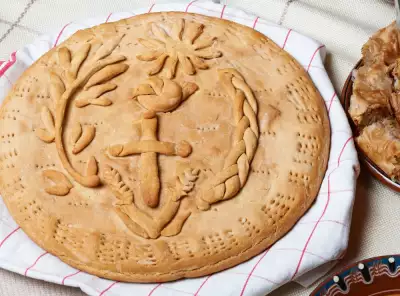
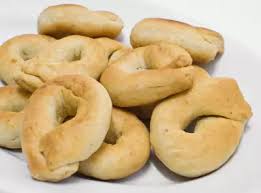
Every holiday has its own bread, with specific ornamentation and shape. The breads are diverse. For Christmas, women knead cookies, which are a symbol of the Sun, and their name means "circle", "wheel". The New Year's pie is the most richly decorated. It is called everything that the owners want in the new year. The New Year's pie is called Bogovitsa - because every year the Bulgarian renews his relationship with God. In addition to suns and chickens, ears of wheat and fruits, an obligatory ornament is a shepherd dog with a gag or three dogs. It was believed that the dog is a guardian between the worlds and can freely pass into dimensions without being caught by magic. Luck is necessarily put in this pie, but the greatest luck is to have a piece of the common bread, to be part of the clan and one with the family.
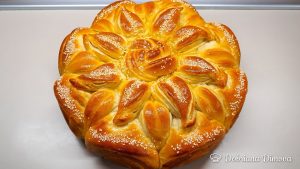
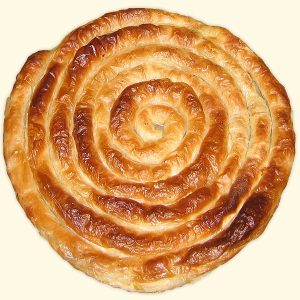
The pie – a very specific and traditional type of bread is not made in our country by chance twisted. The turning is symbol of infinity of the universe, a symbol we also see in the dance. This infinity reminds us that everything is transient and repeatable.
The Bulgarian has very skillfully woven his old beliefs into Christian customs. Easter is the time when we celebrate the Resurrection – the victory over death, over the earthly and the limited. And it is not by chance that on the Christian holiday of Easter, the Bulgarian has been kneading kozunak, a ritual bread, which he braids into a braid since ancient times. And the braiding of a braid with an open end is an ancient Thracian symbol of eternity. At Christmas, the new beginning, the continuation of the family and humanity, is honored.
© 2024 Iliana Dechkova