

Venice - the city of attractions - Venice - the city of attractions
Venice is located almost entirely in the Veneto lagoon and is the only city in the world that lives up to its exceptional position. In the 4th-5th centuries, when the barbarian hordes attacked Italy, the inhabitants of the plain were forced to seek salvation on the Adriatic islands, and there they created the new city, the future "Queen of the Adriatic". Over the centuries, especially during the Renaissance, Venice became one of the most powerful maritime republics on the territory of today's Italy. The activity of many famous personalities is connected with Venice: Monteverdi, Vivaldi, Goldoni, Titian, Veronese. Today, Venice is connected to the mainland by a railway bridge, the Liberty Bridge. The city stretches over 118 islands, which are separated by 116 canals and connected to each other by about 400 bridges. At the end of this incredible road, we reach the Doge's Palace, and near it - the ancient balisica of San Marco in the Byzantine style, rich in beautiful mosaics scattered along the square of the same name. Near the basilica rises the Belfry, about 80 meters high, from which we can enjoy the incredible view of the whole of Venice. Today, Venice lives above all from its past and is perhaps an obvious example of a museum city, one of the most ancient centers of Italian culture.
Venezia is situated almost entirely in the Venetian lagoon and is the only city in the world for its exceptional position. In the 4th-5th centuries, when the barbarian order invaded Italy, the inhabitants of the plains sought refuge on the islands of the Adriatic Sea and created the new city, the future "queen of the Adriatic". Nel corso dei secoli, especially nel Rinascimento, Venezia diventa una delle piú potenti repubbliche marinare d'Italia. Con Venezia é legata l'attivitá di Monteverdi, Vivaldi, Goldoni, Tiziano, Veronese. Today Venice is united alla terraferma with a railway bridge and with the Ponte della Libertá. The city extends over 118 islands, which are separated by 116 canals and connected by approximately 400 bridges. Il Canale Grande in forma di una "S" reversed crosses the entire city for almost 4 kilometers. Alla fine di questa strada meravigliosa rises the Palazzo Ducale and lí vicino – the ancient basilica of San Marco in Byzantine style, rich in splendid mosaics, situate sulla piazza homonyma. Vicino alla basilica rises the Campanile, about 80 meters high, from which you can admire the view of Venice. Today Venice is a city that lives from its past and remains perhaps the most evident example of a city-museum, one of the most ancient centers of Italian culture.
The whole city is a unique landmark in itself – The entire city is a unique attraction.
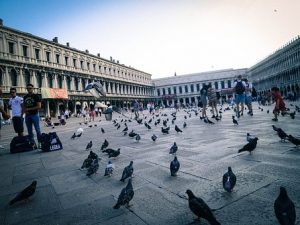 Plaza San Marco – If you really want to understand the might of the former Venetian Empire – this is the place to visit. In the square you will find the Basilica of San Marco. The Doge's Palace with its grand halls and clock tower; the bell tower, from where the majestic view of the whole city is revealed.
Piazza San Marco – Se si vuole veramente comprendere la potenza dell'ex empero veneziano – questo è il posto che vi consigliamo di visitare. Alla piazza si trovano la Basilica di San Marco, Palazzo Ducale con le sue grandi sale e la Torre dell'orologio; il Campanile, che revela la magnifica vista di tutta la città.
The palace Longena – It is one of the most beautiful in the whole city. It was completed in 1756, over 100 years after it was begun.
Palazzo Longhena – Si tratta di uno dei più belli in tutta la città. Completed in 1756, more than 100 years after the start of its construction.
Museum Pesaro – This is the city's modern art museum housed in the old palace. The most exciting works can be seen in the Oriental Art section.
Museo Pesaro – Questo è il Museo urbano d'arte moderna, hosted in the old palazzo. Le opere più interessante possono essere visti nella parte dell' arte orientale.
Rialto Fish Market – Visit it during the week. The fishermen, the lively environment, the old facades and the canal will awaken all your senses. The best butcher shops are also nearby.
Rialto Fish Market – Visitatelo durante la settimana. I pescatori, l'atmosfera vivace, le vecchie faciate e il canale risveglierà tutti i vostri sensi. Vi si trovano anche le migliori butcherie .
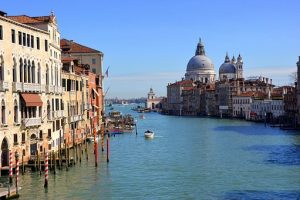 Channel Grande – (Grand canal) is the largest canal in Venice, Italy. It is one of the main traffic corridors in the city. Public transport along it is provided by water buses, private taxis or gondolas.
Canal Grande – è il più grande canale a Venezia, Italia. It is one of the main traffic corridors in the city. Il trasporto pubblico si effettuà da vaporetti, private taxis o gondola.
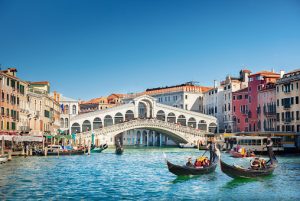
The bridge Rialto – one of the emblematic places for Venice. Its current structure was built over three years between 1588 and 1591. The Rialto Bridge was the only way to cross the Grand Canal on foot before the Accademia Bridge was built in 1854.
Rialto Bridge – è uno dei luoghi emblematici di Venezia. The actual structure was built in three years in the period 1588-1591. Il ponte di Rialto was the only way to cross the Grand Canal on foot before building a ponte di Accademia in 1854
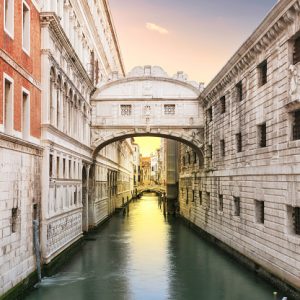
The bridge on the sighs – covered, made of white limestone. There are small windows with stone bars. It connects the old prisons with the interrogation rooms in the Doge's Palace. The bridge was designed by Antoni Contino (the nephew of the architect who built the Rialto Bridge). It was built in 1602.
Ponte dei Sospiri – è un ponte coperto in calcare bianco. There are small windows with stone bars. Collega le vecchie prigioni alle stanze degli interrogatori di Palazzo Ducale. The bridge was designed by Antoni Contino (nephew of the architect who built the Rialto bridge). It was built in 1602.
Basilica Santa Maria affairs Salute – a Roman Catholic church and a small basilica located in the Dorsoduro area.
Basilica di Santa Maria della Salute – è una chiesa cattolica romana and una piccola basilica, che si trovano a Dorsoduro.
The palace on the doge – a Gothic building, a palace that was once the residence of the Doge. Two of its facades overlook the Venetian lagoon and St. Mark's Square. The Doge's Palace houses art treasures, its halls are decorated with frescoes by Titian, Tintoretto and other Venetian artists.
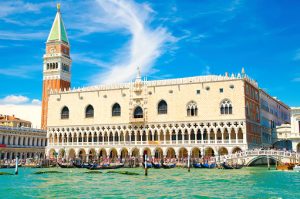
Palazzo Ducale – è un edificio gotico, un palazzo che un tempo era la residence del Doge. Due delle su facciate danno sulla lagoon di Venezia e Piazza San Marco. Il Palazzo Ducale contiene tesori d'arte, le sue sale sono affrescate da Tiziano, Tintoretto e da altri pittori veneziani.
The museum on the glass – is located on the island of Murano. It was built in 1861 and tells the story of glass, the ancient techniques for its processing. Here you will also find the popular Venetian Murano glass.
Museum of Glass – It is situated on the island of Murano. Built in 1861, it tells the history of glass, the ancient techniques of terminación. Qui trovere il vetro di Murano popolare.
The collection on Peggy Guggenheim – is a small museum located on the Grand Canal.
Collezione Peggy Guggenheim – è un piccolo museo situated on the Grand Canal.
Museum Courier – a huge museum that preserves the history of Venice from the XIII to the XVI century, with its collection of paintings, graphics, coins, weapons. Here you will find all preserved objects from the Middle Ages and the Renaissance.
Museo Correr – è un museo enorme che conserva la storia di Venezia dal XIII al XVI secolo, con la sua collezione di dipinti, grafica, monete, armi. Qui troverete tutti gli elementi salvati dal Medioevo e del Rinascimento.
The theater Phoenix – it houses the Venice Opera House. It is one of the most famous theaters in Europe.
Phoenix Theater – teatro d'opera di Venezia. Si tratta di uno dei migliori – noto teatri d'Europa.
Venetian glass from Morano – Venice is famous for its Venetian glass. It is celebrated worldwide as colorful, complex and masterfully crafted. Many of the ornaments on Venetian glassware were developed and invented in the 13th century.

Il vetro veneziano dal Morano – Venezia is known for its venetian wind. È famoso in tutto il mondo come colori, complesso e magistralmente realized. Many Venetian glass products were developed and invented in the 13th century.
ESERCIZI
Exercise 1: True or False
1. Venezia è collegata alla terraferma con un ponte.
2. Il Canal Grande ha la forma di una S normale.
3. Piazza San Marco is an attraction of the city.
4. Il vetro di Murano is famous all over the world.
Exercise 2: Completa le frasi
1. Il ponte ______ is one of the most famous in Venice.
2. Il Palazzo Ducale was the residence of ______.
3. Il museo del ______ racconta la storia del vetro.
4. Il teatro dell'opera di Venezia is called Teatro ______.
Exercise 3: Find the right word
1. Un ponte coperto e chiuso constructed in pietra: ______
2. Piazza principale della città: ______
3. Most famous channel: ______
4. Un'isola famosa per la produzione del vetro:
Exercise 4: Domande a scelta multipla
1. What is the shape of the Grand Canal?
• a) A straight line
• b) A curve
• c) An inverted S
2. Where is the Glass Museum?
• a) A Murano
• b) A Burano
• c) A Rialto
3. Who was the Doge?
• a) A musician
• b) A Venetian chief
• c) A bridge
4. What is the most famous piazza in Venice?
• a) Piazza della Libertà
• b) Piazza San Marco
• c) Piazza Venezia
Esercizio 5: Rispondi alle domande
1. Descrivi cosa si può vedere in Piazza San Marco.
2. Perché il vetro di Murano is famous throughout the world?
3. Cos'è il Ponte dei Sospiri e cosa collega?
4. How can you cross the Grand Canal today?
© 2026 Iliana Dechkova