

WINTER ST. ANNA – December 9
Saint Anna, according to the Bible, is the mother of the Holy Virgin and grandmother of Jesus. On this day, the conception of the Holy Virgin Mary is celebrated. Anna is a descendant of the famous Aaronic family. She is the patroness of women in labor, pregnant women and the family.
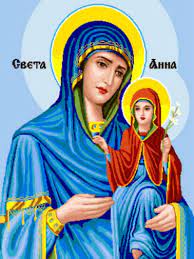 The people call the holiday Janino or Anna's Conception, Anyovden, Anna's Introduction, Saint Anna Catalina. On this day, the sun turns to the East, the day grows, albeit slowly, something new begins. The night before the holiday is considered the longest in the year (according to the old style, the holiday was celebrated on December 22, the day of the winter solstice.
According to a non-canonical gospel, an angel visits Anna and her husband Joachim and brings them the good news that after a long wait, they will finally have a child. Out of gratitude, Anna promises to dedicate the child to the service of God, and when Mary is three years old, she is taken to the temple.
On this day, women do not work so that their children do not get sick, they distribute corn and wheat so that the crops are rich. On this day, according to the belief, the labor pains of the Virgin Mary begin.
The day is associated with many magical acts, and witches and wizards are honored, who cast various spells, some for good, for health and prosperity, others for bad – to lure fertility from someone else's field. Some of the magical rituals were performed in the fields or in cemeteries. The day is similar to Ignazhden, where the first guest in the house determines what the year will be like. But on St. Anne's Day, only children are invited, because it was believed that children are innocent and pure souls, without bad thoughts. To protect themselves from evil spells, people on this day prepared tar crosses with which they chased away all evil spirits.
You can purchase the entire collection dedicated to the holidays and customs of the old Bulgarians here:
Folklore collection "Once upon a time - manners and worldview of the Bulgarians"
St. SPYRIDON – December 12
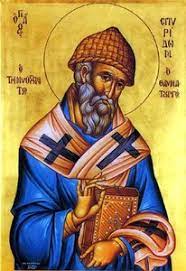 St. Spyridon, according to popular belief, is the patron saint of skin diseases. In the Rhodope Mountains, women knead special loaves of bread, which they distribute for health, and also give to livestock - oxen, horses, etc. The rituals are somewhat similar to those performed on St. Charalambi on February 11 and on St. Vlas, who is the patron saint of the disease vlas. Since in the past the main livelihood of people depended on animals, they were afraid when the plague struck the livestock and did everything they could to appease the saints and the natural elements.
You can read more about the holidays and customs here.
And according to the church, St. Spyridon lived on the island of Cyprus in the 4th century BC and was a bishop. In the iconography of the Orthodox Church, the saint is depicted with a hat woven from willow branches. According to legends, the name Spyridon comes from the Greek word σρείγά, which means a braid, a net, a basket. That is why the saint is considered the patron saint of basket makers, knitters and all craftsmen in general.
.ST. MODEST – December 18
Saint Modest is the patron saint of farmers and shepherds in the Pirin region, Blagoevgrad, Gotse Delchev and Strandzha and is honored on a par with St. George. On the day of the holiday, women prepare ritual breads and distribute them for the health of animals or give them to the animals themselves. Draught animals also “celebrate”. On this day, they are left to rest in the stable and are not harnessed.
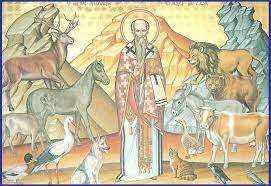 If animals die frequently in the home, the owners make miniature copies of horns or yokes out of aluminum or silver. The goal is to appease the saint and stop the plague on the animals.
The saints, patrons of animals, were especially revered by our ancestors, since horses and oxen were the main assistants of the farmer in sowing, plowing and harvesting. They also served him for transportation. If there were two oxen in the family and one died, this was a serious blow and a prerequisite for poverty.
© 2023 Iliana Dechkova