
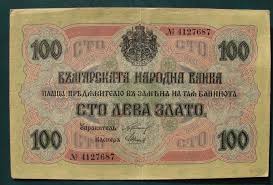
📌 What is a currency board?
Currency board (in English: currency board) is a form of monetary regime in which a country fixes its national currency to another stable currency (for example, the US dollar or the euro) and is required to maintain 100% foreign exchange reserves covering the money supply. This means that the central bank:
- cannot arbitrarily issue money, but only as much as there is foreign currency in reserve;
- does not conduct an independent monetary policy – interest rates, inflation and other indicators are largely determined by the currency to which the local one is tied;
- guarantees the exchange rate fixed (or with very little possibility of deviation).
Bulgaria introduced a currency board in July 1997, following severe hyperinflation and a financial crisis. The lev was initially pegged to the German mark, and after the introduction of the euro, to it. Since then, 1 euro = 1.95583 leva.
Advantages of the currency board:
- Currency stability and low inflation
- Increased trust from investors and citizens
- Fiscal discipline – the state cannot "cover" deficits by printing money
Disadvantages:
- Inability to respond to economic crises – lack of flexibility
- Dependence on the economy of the country whose currency you are tied to
- Risks from external shocks, since you can't devalue your currency
💡 What does this look like in practice? Bulgaria has 10 billion leva in circulation. This means that the BNB must hold 10 billion leva in euros in its foreign exchange reserve (at the rate of 1 EUR = 1.95583 BGN → about 5.1 billion euros). If someone wants to exchange levs for euros – the BNB is obliged to give him exactly this rate, without risk of devaluation.
✅ Result:
- Inflation fell from over 500% in 1997 to below 10% in 1998.
- Confidence in the banking system is being restored.
- The lev becomes a stable currency, which paves the way for EU membership.
📌How does the state (BNB) cover every new lev with euros?
💰 The Central Bank (BNB) does not create money on its own. The BNB cannot issue new leva unless someone brings euros into Bulgaria (e.g. through trade, investment, tourism, etc.). Example transaction:
A company in Bulgaria exports goods and receives 100,000 euros:
- She deposits these euros into her commercial bank.
- The bank sends them to the BNB.
- The BNB takes these 100,000 euros and at the fixed rate (1 EUR = 1.95583 BGN) issues 195,583 leva.
- These leva are now entering the economy.
Important: Every lev in circulation is “backed” with euros – if someone decides to convert levs back into euros, the BNB has a reserve to do so. If there is no new inflow of euros (e.g. a decline in exports or tourism), The BNB cannot print more moneyThis stops inflation, but also limits economic flexibility.
Още интересни анализи можете да откриете в нашия Блог
🏦 Summary:
- Every new lev = euro brought into the country.
- The BNB keeps as many euros in reserve as there are all the leva in circulation.
- There is no "printing" of money - the lev does not exist independently.
📌Are there any countries that still have gold backing for their currency?
No, no country today uses a gold standard in its full sense – i.e., where each unit of currency is directly exchangeable for a certain amount of gold at a fixed rate. Most developed countries abandoned the gold standard after the Great Depression (1930s). The United States ended it completely in 1971, when President Nixon abolished the exchange of the dollar for gold – the so-called “end of the Bretton Woods system.” Since then, all currencies have been "fiat" - that is, they have no material backing, and their value is based on trust in the state and the central bank.
Some countries hold large gold reserves as part of their foreign exchange reserves: USA, Germany, Italy, France, Russia, China. However, these countries do not use gold as a direct backer of money, but rather as a buffer against global financial shocks.
🪙 Exceptions or interesting cases:
- Switzerland until 1999 it partially backed the franc with gold, but no longer.
- Zimbabwe, after hyperinflation, released "gold coins" (2022), but this is not a gold standard.
- BRICS countries (like Russia and China) talk about introducing a "backed currency", possibly with gold, but this is still at the idea level.
📌How can one exit a currency board?
🟠 1. Transition to a floating exchange rate
- The Central Bank stops the fixed exchange rate and begins to allow the currency to trade freely on the market.
- This means that the lev/euro exchange rate (in the case of Bulgaria) may fall or rise sharply, depending on demand and trust.
📌 What is needed:
- Sufficiently large foreign exchange reserves;
- An independent, well-managed central bank;
- Trust from the markets;
- Flexible fiscal policy (i.e. the state being able to manage debt and spending wisely).
📉 Risks:
- Possible devaluation of the lev;
- Inflationif imported goods become more expensive;
- Investment outflow.
🔴 3. Emergency exit in a crisis ("breakdown" of the board)
- This happens when loss of trust, panic, depletion of foreign exchange reserves;
- The central bank is forced to end the fixed exchange rate;
- Next chaos, inflation, devaluation, political instability (example: Argentina 2001).
📉 This is the most dangerous option – unwanted and uncontrolled.
📌Comparison of the role of the BNB: Currency Board vs. Eurozone
| 🔍 Function | 🏦 Currency board | 🇪🇺 Eurozone |
|---|---|---|
| Currency in circulation | Lev (BGN), pegged to the euro | Euro (EUR) |
| Determining the exchange rate | Fixed exchange rate to euro (1.95583) | None – ECB manages policy |
| Monetary policy | None – the exchange rate and quantity of money are fixed | None – managed by the ECB |
| Issuing money | Levs backed by euros | Euro, under the control of the ECB |
| Participation in the ECB | Observation/restricted status | Full member of the ECB (voting on the Governing Council) |
| Reserve management | Yes – a key role in maintaining the board | Partially – part of the reserves are managed by the ECB |
| Banking supervision | Yes – full responsibility | Shared with the ECB through the Single Supervisory Mechanism |
| Budget financing | Forbidden | Prohibited (according to ECB rules) |
| Payment system | Manages the Bulgarian part | Continues, but as part of the TARGET system |
| Main goal | Maintaining a stable fixed exchange rate | Participation in the overall financial and monetary stability of the euro area |
🧠 Conclusion:
Since 1997, our country has been financially dependent and these cries that we will lose our financial independence are nonsense. But, it is best for Bulgaria to stay in a currency board, because the BNB will lose the few rights it has. The fact that it will be a full member of the ECB is only a theoretical myth. In practice, no one will respect our voice. We will remain the trash can of Europe as before. The country can exit the currency board and be completely independent if it has enough foreign exchange reserves. And this is done by producing goods and services and selling them on the foreign market. And here comes the question: where is the money from the gold!?!? It is clear that from the mass privatization everything was sold off for next to nothing and the little money made sank into someone's pockets. The same with gold.
In general, this fiat currency thing is a lie. It is no coincidence that some of the world powers are thinking about using gold plating again as a measure. Because what does it mean to trust the state... it is so subjective and relative and depends on someone's human interests... it is another thing to have a gold reserve, something material... however, we don't have that anymore either.
Although in theory joining the Eurozone seems like a more acceptable option, in practice it won't happen that way and the situation will become "our pitiful mother"... because for 30 years now the same people have been stealing. And they will continue until they stop breathing. Until then, I am FOR preserving the lev, at least at this stage.
🚨 What if Bulgaria violates the eurozone's budget rules?
The EU can impose different types of sanctions, depending on the extent and nature of the breach. First, the EU tries to rectify the situation through warnings and recommendationsIf the country does not respond, more serious actions are taken.
If the country:
-
there is budget deficit over 3% of GDP,
-
or debt over 60% of GDP and it's not reducing it fast enough,
a procedure can be triggered for excessive deficit (EDP – Excessive Deficit Procedure).
Then sanctions are possible:
-
Mandatory "deposit" of funds: The country must import interest-free deposit in the EU (e.g. 0.2% of GDP).
-
Fines: If there is no improvement, the deposit may become irreversible fineThe fine may increase to 0.5% of GDP or more in case of systemic disorders.
-
🚨 Blocking of EU funds: Can be temporarily freeze funds for European programs.
-
Enhanced oversight and reporting requirements: The country can be placed under stricter monitoring and have to report frequently to Brussels.
-
Political pressure and reputational damage: Lack of confidence from investors and other parties could raise borrowing rates and worsen the economic environment.
© 2025 Iliana Dechkova