
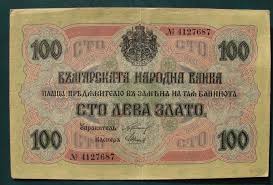
Бългapcĸият лeв нaвъpшвa 146 гoдини !
Интересната история на парите ни връща назад във времето. On June 4, 1880 The Law on the Right to Mint Coins in the Principality of Bulgaria was promulgated. This law created the national monetary unit "lev", divided into hundred parts – “cents” and the weight, metal content and designs of Bulgarian coins are determined. The normative act determines the amount of gold, silver and copper in the coins, while the total money supply in the country is limited to 15 million leva. The value of the leva at its “birth” is equal to the French franc.
📌 How do you get paper money?
The earliest stage of trade is the so-called barter exchange. The transition from barter to barter-money exchange is an important stage in the economic development of humanity. Here is how this process occurs:
🔄 1. Barter. The earliest form of trade is barter. People directly exchange one good for another – for example, bread for milk. A major problem: double coincidence of needs – both parties must want what the other offers.
💰 2. Emergence of a common equivalent. Over time, it was noticed that some goods were more in demand and universal – for example, salt, cattle, furs, gold and silver. These goods began to be used as a medium of exchange – everyone accepted them because they knew they could be exchanged for other goods later. Thus, the role of a common equivalent was formed.
💵 3. Appearance of money. From the multitude of common equivalents, one commodity gradually prevails, which fulfills this role best – for example, gold. It is accepted by everyone as money – a medium of exchange, a measure of value and a means of accumulation. This leads to commodity-money exchange, in which the exchange now takes place through money:
Example: a person sells bread for money, and then uses that money to buy milk
Over time, humanity transitioned from commodity-money exchange to money-commodity exchange.
• Commodity-monetary exchange: goods are at the center → people produce goods to exchange them with the help of money.
Example: bread → money → milk
• Money-commodity exchange: money is now at the center → people sell to get money and buy to satisfy their needs.
Example: money → goods → profit
💼 Importance for the economy:
- Money becomes the main driving force in trade and production.
- Commodity production for the market, not for personal use, appears.
- Capitalist relations are created: Production → sale → profit → new production
- Banks, loans, labor leasing – a financial system – emerge.
- The beginning of the market economy, where:
- Goods are produced for the purpose of sale.
- Prices are determined by supply and demand.
🧠 Summary: The transition to monetary-commodity relations marks a shift from natural exchange and production to a market economy. The central goal is no longer simply the exchange of needed goods, but the accumulation of capital (profit).
📌 Securing the money
🏛️ 1. Historical types of collateral
🪙 Commodity money (natural collateral). In the past, money was the value itself – gold and silver coins. Collateral = the precious metal content.
Example: a gold coin has value because the gold itself is worth
💵 Paper money backed by gold. In later centuries, countries began to print paper money, but with the promise that it could be exchanged for a certain amount of gold. This was the so-called gold standard.
Example: 1 paper lev = a certain amount of gold
📊 2. How is modern money secured today?
💸 Modern money is not backed by commodities. It is called Fiat money (trust money). Today, money is not backed by gold or other commodities. It has value because:
- the state declares them legal tender and
- people and the market have confidence that they will be able to use them.
Modern money is secured through:
✅ Economic stability of the country – Stable economy = stable currency. Trust in the monetary system and the central bank.
🏦 The activities of the Central Bank – Manages inflation, interest rates, money supply. Ensures that there is not too much money in circulation. Behind money are:
- Government reserves (including currency and gold).
- Government securities.
- Real assets and economic output.
📘 Summary:
Period Type of money Provisioning
Antiquity Gold, silver The commodity itself (metal)
Until the 20th century Paper money Gold standard
Modernity Fiat money Trust + economic stability
COMPARISON:
Gold standard 👍 Stability, trust, low inflation👎 Little flexibility, risk of deflation or: If 1 lev = 1 gram of gold, the BNB cannot issue more than 1,000 levs if it has 1,000 grams of gold. This limits inflation, but also economic growth when more money is needed.
Fiat currency👍 Flexibility, opportunity for incentives👎 Risk of inflation and abuse or: If the state wants to finance a major infrastructure project or deal with a crisis, it can print money – but this carries the risk of inflation.
© 2025 Iliana Dechkova