From "Once upon a time - manners and worldview of the Bulgarians"
The legends
Every year on February 2 is celebrated – Petlovden. In the past, the Bulgarian people celebrated it as a special day – a holiday for boys. There are parallel legends about this day. In both traditions, the day is dedicated to the preservation and preservation of male offspring.
In ancient times, a blood tax was collected during Turkish slavery. The Turkish army went from village to village every year and collected the healthiest and most beautiful male offspring, fit to be trained as Turkish soldiers as janissaries. The children never saw their families again. In order for the Turks to know where they came from, they smeared the gates with red paint. In one village the women were cunning, and when they found out that the army was coming to collect their blood donation, in every house where there was a boy to donate, the mothers slaughtered a rooster and smeared the gate with its blood. Thus the army passed the village and the children were saved. According to other stories, when the Turks approached the house, the mother cried and ordered that she had killed the boy, just so that she would not give him away as a Janissary. The soldiers were stunned by the woman's desperation and left the village. Thus all the boys were saved.
Another legend tells of the time when King Herod ordered all the newborns to be killed, in search of the new king. A mother, in order to save her offspring, bloodied the gates with the blood of a rooster and thus confused the army.
The symbol of the rooster
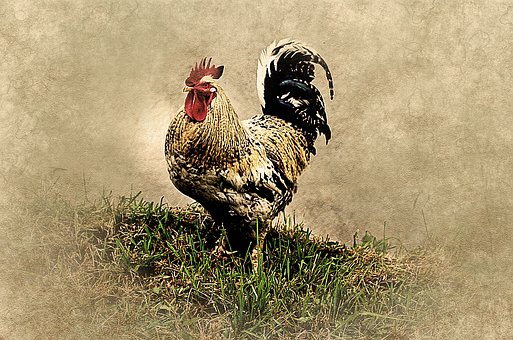
The rooster in the Christian and pre-Christian tradition is a symbol of birth, the new beginning, the Sun and the Resurrection.
Even before the fall, the father calls the rooster that will be slaughtered on that day. If there is no boy in the house, the mother brings a rooster to a "man's" house, where it will be slaughtered so that she will also have a male child and have someone to continue the family. When the rooster is slaughtered, its blood is sprinkled on the threshold of the house and smeared on the boy's forehead for health. Nothing sharp is touched on this day, so that the children are not born with scars. The slaughtered animal is cooked - baked or boiled whole, in some parts of the country it is given to neighbors for health. There is also fresh bread or pie on the table, and mulled wine with black pepper to drink. Men and barren women are forbidden to participate in the ritual. The mother of the young "rooster" drove the sacrificial animal - in front of the house, on the lawn, in the garden. Besides sprinkling the yard with the blood, the mother also smears the doors to the street. The tail feathers are plucked and used for decoration.
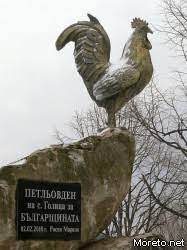
Today, the custom is strongly preserved in the Varna village of Golitsa. There is also the only monument to a rooster.
© 2023 Iliana Dechkova