
From "Once upon a time - manners and worldview of the Bulgarians"
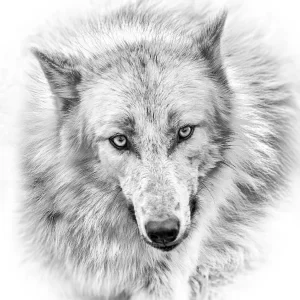 The proto-Bulgarians, unlike many other peoples, believed in one God. It was called Tangra or Tengri. The people were distinguished by a high spiritual and material culture. In this one god they gathered everything - heaven and earth, sun, water and fire. At the same time, totemism - the worship of totems - was widespread. It was an animal (rarely a plant) revered as the progenitor of the tribe and elevated into a cult. the old Bulgarians believed that people of common origin had a common ancestor, who after death assumed the image of a certain animal. It becomes the patron of the genus.
It is not by chance that the proto-Bulgarian calendar is divided into 12 annual cycles and each year is dedicated to a certain animal. The wolf is one of the most revered animals because it was closest to their surroundings.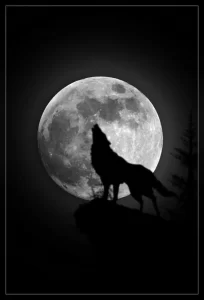
Every tribe had a priest who had magical abilities. The priests were the religious leaders of the people. Often the ruler was also the high priest. During the rituals, the priests assumed the form of various animals. The priest-king also had assistants for the rituals, usually people from the aristocracy or close relatives of the ruler.
Folklore collection "Once upon a time - manners and worldview of the Bulgarians"
The people still revere the wolf today, which is why the days from February 1 to 3, known as Trifuntsi (Southeastern Bulgaria), are dedicated to it. This name comes from the feast of St. Trifon Zarezan. They are also called Wolf Holidays. No sharp objects are picked up, especially knives and scissors. It is believed that if this prohibition is violated, the wolf will do mischief to the family. In Southern Bulgaria, the Wolf Holidays are during the period of the Dirty Days, and in the rest of the country they begin on Archangel's Day.
© 2023 Iliana Dechkova