
From "Once upon a time - manners and worldview of the Bulgarians" It was believed that when the young man carols and the girl lazaroves, they are already ready for marriage and starting a family. Contrary to expectations, Bulgarian maidens and bachelors had the freedom to see each other, to choose each other, to appreciate each other. People on holidays, meetings, gatherings are...

Public holidays in November
From “Once Upon a Time – Customs and Worldview of the Bulgarians” The month of November is filled with folk and church holidays. The agricultural year is over, people have harvested their crops and it is time to indulge in a well-deserved rest. ST. ARCHANGEL MICHAEL – November 8 According to the Bible, Archangel Michael is the chief angel of God. He guards the body of …

The cards - should we play or guess?
A Brief History of Cards Playing cards are small rectangles of thick cardboard or thin plastic used in card games. A complete set of playing cards is called a pack or deck. The cards in a deck are of the same shape and size. The cards are also used for focussing, "card reading"...
Прочети цялата публикация →„Картите – да поиграем или да си погадаем ?“

Archangel's Day – November 8
From "Once upon a time - manners and worldview of the Bulgarians" According to the Bible, Archangel Michael is the chief angel of God. He guards the body of Moses and leads the souls of the dead to Heaven or Hell. And there, at the gates of Heaven, as we know, stands St. Peter, the heavenly locksmith, who strictly follows in his notebook...

Dimitrov Day – October 26
From "Once upon a time - manners and worldview of the Bulgarians" An old folk tale tells about two twin brothers - Dimitar and Georgi. St. Dimitar was the first born, rides a black horse and is the lord of winter. With Dimitroden came snow and winter. This is the last period when the farmers pay with shepherds and rathais, put the plow away dry, ...
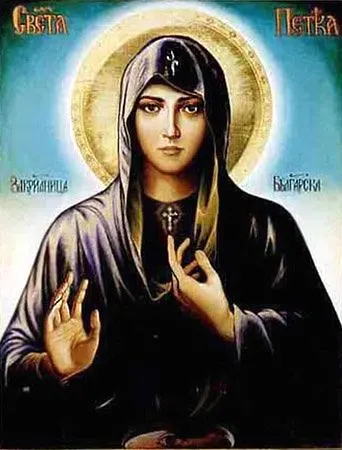
Friday - October 14
From "Once upon a time - manners and worldview of the Bulgarians", the people say that Saint Petka leads the holidays. Family celebrations begin with this holiday. They call them "saint", "holy", "service", "meal", "glory", "record", "writing" or "vicar". A sacrificial offering is carried, which is consecrated in the church, and ritual breads called "bogovitsa" are kneaded. With Petkovden, Bulgarians mark the coming of...

Our folk instruments
From "Once upon a time - manners and worldview of the Bulgarians" Some of the Bulgarian musical folk instruments are characteristic of almost the entire territory of Bulgaria, while others are concentrated in a certain folklore area. In Bulgarian folk music, 5 main folk instruments are used - kaval, bagpipe, gadulka, tambourine and drum, as well as characteristic of individual folklore...

Eight of the most common embroidery designs
From "Once upon a time - manners and worldview of the Bulgarians" Here are some of the most common symbols woven into clothes and carpets SCISSORS - ENGAGEMENT Scissors are the main sign of family and clan symbols. Scissors in Bulgarian means a branch, a sign of the masculine and feminine, of the divine and the earthly. Scissors interprets the two parts of the rhombus...
Прочети цялата публикация →„Осем от най-често срещаните шевици“

Embroidery and symbols in costumes
From "Once upon a time - manners and worldview of the Bulgarians" To embroider an embroidery requires skill and patience. The needle tirelessly pierces the cloth, and patterns the Bulgarian clothes and carpets with dyes and figures. Breaking through the tissue is an action that expresses fertilization. For the new life to be born, the fabric, the flesh...

Importance of Garment Parts Types - Part 2
From "Once upon a time - manners and worldview of the Bulgarians" Outerwear. Represents a coat in women. Crafting materials are mostly leather or fine cloth with lambskin lining and gameskin trim. The skin is a symbol of the animal, of the foreign - signs that express the transitional state of the bride in the new family. The top…
Прочети цялата публикация →„Значение на видовете части на облеклото – част 2“