

Правилната употреба на предлозите In или А на италиански език често е предизвикателство за учениците.
P p oh with t and and h l is n in in a n and
- MEMBERSHIP of the PROPOSAL:
- When we join in Bulgarian, we also join in Italian
- Possessive pronouns to related names in units NOT are members, with off loro
- When we have addition, clarification, explanation, clarification to:
- the place of movement,
- the means of transport,
- the season
- the year
- The following prepositions merge with the definite article when forming a preposition:
DI, DA, IN, A, SU
- The following prepositions are NOT combined with the definite article:
CON, PER, FRA, TRA (CON has an obsolete form of merger, similar to the others, which is very rare)
- TABLE OF CONJUNCTION OF PREPOSITION WITH DEFINITIVE ARTICLE
il l' lo la i gli le
di del dell' dello dello dello deli delle
a al all' allo alla ai agli alle
yes dal dall' dallo dalla dai dagli dalle
in nel nell' nello nella nei negli nelle
su sul sull' sullo sulla sui sugli sulle
- TYPES and USE
a – on, in
- movement towards a place – where
- way – how
- indirect add. – to whom
- I must give this book to Mario.
- I can't write the letter by hand.
- Vado a Sofia domain – I am going to Sofia tomorrow
- Parlo a te – I am talking to you
- a quattr'occhi – with four eyes
- a voce – out loud
- a righe, a quadrati – striped, checkered (for fabric, for example)
in – in, in
- movement towards a place – where
- means of transport – with what, how
- location – where
- field of activity, language
- Tonight we're all going to the disco - Tonight we're all going to the disco
- Tomorrow Laura and Roberto arrive in France – Tomorrow Laura and Roberta arrive in France
- I go to school by bus – I go to school by bus
- The house keys are in the purse.
- Parlo solo in italiano – I only speak Italian
- Devo dare l'esame in matematica domain – I have to take the math exam tomorrow
with – with, with
- with whom
- means of transport – how, with what
- characteristic
- Franco va al lavoro con la macchina - Franco goes to work by car
- Stasera Luisa viene con te – Tonight Luisa is coming with you
- Parlo con te – I am talking to you
- Dove vai con questa pioggia? – Where are you going in this rain?
- I am angry with Roberto – I am angry with Roberto
- Luisa is married to Mario – Luisa is married to Mario
- E'una bella donna con gli occhi azzurri – This is a beautiful woman with blue eyes
per – for, in order to
- for whom, for whom
- when per is followed by a verb, it is in the imnf. and is translated TO
- movement towards a place – where
- by what, reason
- Per me tu sbagli - To me (in my opinion) you are wrong
- To go to the center, you must take number 13.
- Are you leaving for Sofia or for France? – Are you leaving for Sofia or for France?
- Devo organizador una festa per il tuo compleanno - I have to organize a party for your birthday
- He told me the good news on the phone.
- He will not come to lectures for health reasons.
- Studio l'italiano per lavoro – I am learning Italian for work
brother-in-law – after – between
- when, where
- interchangeable
- Vengo fra poco – I'm coming in a little while
- Pisa é tra Firenze e Livorno – Pisa is between Florence and Livorno
yes – from, at, through
- movement towards someone
- moving away from a place
- purpose
- Porto il bambino dal medico – I am taking the child to the doctor (to the doctor)
- Tu vieni da Paola oggi? – Are you coming to Paola's today?
- This is a very old (antique) coffee cup.
- Passiamo dai genitori di Laura – We pass through Laura's parents
- Mr. Rossi's house has three bedrooms.
- articoli da donna – women's goods (women's goods)
- scarpe da uomo – shoes for men (men's shoes)
- sala da pranzo – dining room (lunch room)
- where
- topic of conversation
- Your bag is on the table.
- There are always many tourists on Italian beaches.
- Carlo is walking down the street.
- Let's have a discussion about politics – Let's talk about politics (let's discuss politics)
- É un bambino sui Quattro – This is a child of four years old
di – on, from, with, through
- possession – of
- origin, substance – from
- content – with
- when – during
- characteristic
- La casa grande é di sig. Bianchi – The big house belongs to the Bianchi family.
- Prendo un bicchiere di vino – I will take (order, drink) a glass of wine
- Siamo di Varna, ma viviamo a Napoli - We are from Varna, but we live in Naples
- My new skirt is made of pure wool.
- That table is made of wood – This table is made of wood (wooden)
- Laura works in a travel agency – Laura works in a travel agency
- The Chamber of Commerce is located near the Notary Chamber.
- a set of cups – a set of porcelain cups
- di giorno, di note – during the day, at night
- un gruppo di amici – a group of friends
- giorno di lavoro – working day (working day)
- cittá di Varna – city of Varna
- Lake Como – Lake Como
- É un ragazzo di vent'anni – This is a 20-year-old boy.
- A man of his intelligence is a true rarity – A man of his intelligence is a true rarity
- Piú di… meno di – more than… less than
yes – before
- when
- un anno fa – one year ago
- una settimana fa – one week ago
below – under, below
- where
- Sotto il tavolino c'é una penna rossa – There is a red pen under the table.
- There is always a lot of noise downstairs.
above – above, on, above
- where
- The neighbor from above is very handsome.
- Il gatto sta semper sopra il tetto - the cat is always on the roof
without – without
- Today I am without a car.
back – to
- when
- Carla's friends will come at seven o'clock - Carla's friends will come at seven o'clock
near – near
- Vicino a casa mia c'é un bar – There is a bar near my house.
in the middle of – in the middle, in the middle
- Non mi sento bene in mezzo al trafficо – I don't feel good when I'm in the middle of traffic
in front of – against
- The bar opposite Mario's house is also open at night.
next to – next to, next to
- The fireplace is next to the window.
inside – inside
- follows the definite article, not a preposition
- The girl with green eyes is inside the bar – The girl with green eyes is inside the bar
outside – outside
- follows the definite article, not a preposition
- The boys have been out for many hours.
in front of – front
- Luigi is in front of me – Luigi is in front of me
behind – behind
- follows the definite article, not a preposition
- The cat sleeps behind the door – The cat sleeps behind the door
- Using prepositions for movement to a place without the verb
| a casa – at home
a cena – at dinner a teatro – at the theater a scuola – to school a fare spese – on purchases to take a walk' – for a walk a giocare – to play a destra – to the right a sinistra – to the left al mare – at the sea al cinema – at the cinema al lavoro – at work alla banca – in the bank al bar – at the bar, at the bar a piedi – on foot |
in ufficio – in the office
in bar – in the bar in biblioteca – in the library in discoteca – at a discotheque in cittá – in the city in montagna – on the mountain in ristorante – in a restaurant in banca – at the bank in centro – in the center, in the center in bagno – in the bathroom in via – along the street
|
5. Use in means of transport
- When no clarification to the means of transport:
IN , CON+ ARTICLE 10
- Vado al lavoro in macchina = Vado al lavoro con la macchina – I go to work by car
- Loro arrivano stasera in aereo = Loro arrivano stasera con l'aereo - They arrive tonight by plane
- When there is a clarification to the means of transport: CON + REP. ART.
- I go to work with Luigi's car – I go to work with Luigi's car
- They arrive with the 7 o'clock plane (the plane that took off at seven)
- Usage regarding direction of movement
ZOOMING to a location ››››››
|
Andare – I am going Venire – I come Arrivare – I arrive Tornare – I return
Vivere – I live Abitare – I inhabit, I live |
a – c – city name
+ in – in – name of a country, continent, place, island yes – at – person |
§ Vivo a Varna – I live in Varna
§ Torniamo a Londra – We return to London § Quando arrivate in Francia? – When are you returning to France? § Abitano volentieri in Sicilia – They live happily in Sicily § Vanno dal medico stasera – they are going to the doctor tonight § Luca viene da Carla con noi – Luca comes with Carla to us |
|
Partire – I leave, I leave |
per – for
|
§ Parto per Varna – I am leaving for Varna
§ Let's go for the Francia – We are leaving for France |
‹ REMOVAL from a place
|
Venire – I come Arrivare – I arrive Tornare – I return
Partire – I leave, I leave |
yes – from |
§ Torniamo da Londra – We are returning from London
§ Quando arrivate da Francia? – When are you arriving from France? § La signora parte da Firenze in autobus – The lady leaves for Florence by bus § Arriving from Switzerland in 1 hour – I arrive from Switzerland in 1 hour
|
7. Usage in naming dates, seasons and months
- Seasons: IN, DI
- Andiamo in vacanza in estate – We are going on vacation (going on holiday) in the summer
- It is always cold in winter.
- Last summer it was very hot (warm)
- In the autumn of 2011 it was warm for a long time.
- Months: A, IN (if membership required, IN only)
- In April nature is reborn – In spring nature is reborn
- The boys go to the sea in June – The boys go to the sea in June
- In May 2012 there was a holiday – In May 2012 there was a holiday
- Year: IN membered
- Nel 2002, in febbraio… – In 2002 …..
- In 1974, on November 30… – In 1974, on November 30…..
- In the year 2011, in August…/ in August… – In 2011, in August
- DATE: REP. ART.
- Il 25 maggio del 2010 – 25 May 2010
- The first of October – The first of October
- Constructions
DA…A – FROM…TO (for all situations)
- We are going on a trip from Florence to Naples – We will take a walk (tour) from Florence to Naples
- All the houses from the beginning to the end of the street are beautiful.
DALLE…ALLE – FROM…TO (in hours)
- Hanno aspettato dalle 5 alle 7 (hanno aspettato 2 ore) – They waited from 5 to 7 o'clock (they waited for 2 hours)
- I have been waiting for the arrival of the train for 3 hours.
- The shop is open from 8 to 17 – The shop is open from 8 to 17
ALLE… – In… (for hours)
- What time does the film start? – Alle 21 precise – What time does the film start? – At 21 o'clock exactly
- What time does the train from Milan arrive? – At 12:45 – What time does the train from Milan arrive? – At 21:45
- Using prepositions with some verbs
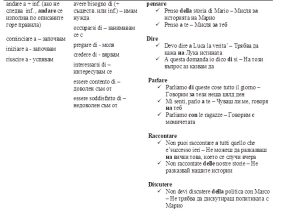 VERB/ conjugated/ + preposition A + INFINITIVE
VERB/ conjugated/ + preposition DI – the preposition is translated FROM
© 2025 Iliana Dechkova