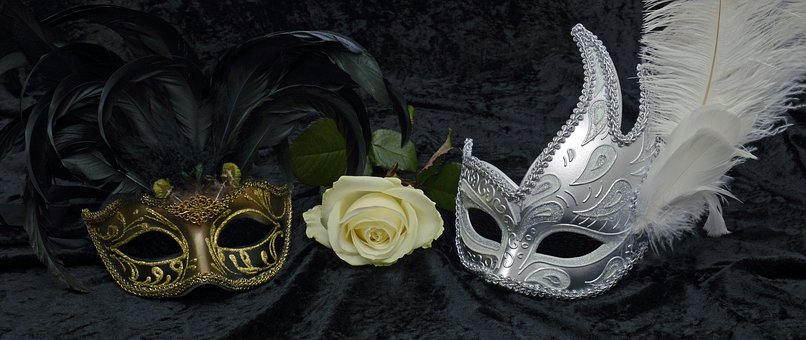
Commedia dell'arte (Italian for Commedia dell'arte, "professional comedy") is a theatrical genre that developed in Italy in the 16th century by traveling troupes. Its exact origins remain unclear, but elements of ancient Greek and early modern Roman comedies have been discovered. By the end of the 16th century, theater companies already existed in other parts of Europe; and in the 17th century this style was already widely spread throughout Europe. After 1750, it began to gradually decline and by 1800 it had completely died out.
La commedia dell'arte (in Italian Commedia dell'arte, "professional comedy") is a theatrical genre that was developed in Italy in the XVI century by compagnie viaggianti. Le sue origini esatte remain poco chiare, ma ci sono elementi di antiche commedie greche e romane dall'inizio della nuova era. Alla fine del XVI secolo esistevano già compagnie teatrali in altre parti d'Europa; and in the 17th century this style was already diffused throughout Europe. Dopo il 1750 cominciò gradually a vanire e nel 1800 era già completamente morto.
Characteristic features
The performances of the Commedia dell'arte are based on the so-called Kanovacho – a completely conditional script (kanavà) on which the actors improvise. Actors usually specialize in a role and play it throughout their career. The script itself was a written rough plan of the plot, usually specifying where the action would take place, and defining in a general sense the actions and speeches of the actors, leaving them free to improvise the specific dialogue and manner of presenting their characters. In addition, it indicated the places where "creeps" - intermissions with comic scenes - should be inserted. These skits, performed by comedians, often had nothing to do with the plot of the play. When the audience got a good dose of laughter, "lazo" would turn their attention back to the theme of the performance. Some of the more elaborate and convoluted jokes had their own plots, but in all cases the basic script determined the form of the play.
Characteristics
The performance of the Commedia dell'arte is based on the so-called Canovo – uno scenario (fosso) molto condizionale su cui gli attori improvvisano. Actors in general specialize in a role and interpret it during their career.
The sceneggiatura stessa era una bozza della trama scritta, in genere specificava dove avrebbe avuto luogo l’azione e definiva in senso generale le azioni e i discorsi degli attori, lasciandoli liberi di improvvisare dialoghi specifici e modi di presentare i loro personaggi. Inoltre, indicava i luoghi in cui inserire „brividi“ – si intromette con scene comiche. Queste scenette eseguite da comici spesso non avevano nulla a che fare con la trama della commedia. Quando il pubblico ha ricevuto una buona dose di risate, Lazo ha riportato la sua attenzione sul tema dello spettacolo. Alcune delle battute più complesse e intricate avevano le loro trame, ma in ogni caso lo scenario principale ha determinato la forma del gioco.
 About 1,000 Commedia dell'arte scripts have come down to us, some of them quite complex and convoluted, others clearly the work of actors. Improvisation based on the script required spontaneous collaboration between the actors. Therefore, the years spent wandering around Europe in search of an audience helped. This long-term forced coexistence (each troupe worked and lived in close proximity) developed a strong sense of group belonging. In a group in which each expressed his individual talents while lending them to the benefit of the collective performance, sensitivity to the intentions of the other actors had to be comparable to clairvoyance. Under such conditions, any manifestation of selfishness would endanger the peace of mind and balance in the troupe. For these reasons, it was accepted to enter into contracts specifying the rights of the actors. In them, by mutual agreement, a director of the troupe was determined, dealing mainly with organizational activities, as well as with observing the fair distribution of income and even food, to whom the others were obliged to obey.
Abbiamo rapgiunto circa 1000 sceneggiature della Commedia del Arte, alcune delle quali sono complesse e intricate, altre obviously opere di attori. L'improvvisazione basata su sceneggiatura has required a spontaneous collaboration between the actors. Ecco perché gli anni trascorsi viaggiado per l'Europa alla ricerca di un pubblico hanno aiutato. This long-term coexistence (every troupe has worked and lived intimately) has developed a strong sense of belonging to the group. In un gruppo in cui ogoneno ha expresso i propri talents individuali suppliant allo stesso tempo un'espressione collettiva, la sensibilità alle intenzioni di altri attori dovrebbe essere paragonabile alla chiaroveggenza. In tali circumstances, any manifestation of egoism minaccerebbe la pace e l'equilibrio del cadavere. Per questi motivi, si è convenuto di concludere contratti che specificano i diritti degli attori. Di comune accordo, designano un direttore di una troupe principally impengata in attività organizzata, asoveando osservando la giusta distribution del reddito e persinca il cibo a cui gli altri erano obbligati ad obbedire.
 The drama of the Commedia dell'arte, with its peculiar ability to respond instantly to the moods and receptivity of the audience, has been an ideal instrument for constantly probing and redrawing the boundaries of taste and prudence, not for a generation, or a year, or even a month. and of their place for the moment of tonight's performance, as compared with those of the previous day or of the previous week. The edge of this humor touched lightly, and sometimes burst many of the pus formations that appeared in society and thus made more serious reorganizations in the social order unnecessary. In the 18th century, the fashion of the Commedia dell'arte quickly subsided, the audience became more and more demanding. The spontaneity and vitality that used to be the essence of the genre give way to worn-out rehearsals and audience indifference. A letter dating from 1696 mentions that the humor of the Italians was beginning to become too coarse. In later years, attempts were made to revive the genre by those who did not want to see its magic disappear. Two Venetian dramatists, mortal enemies - Carlo Goldoni and Carlo Guzzi tried to rejuvenate the traditional characters by including them as characters in plays containing moral judgments missing in the old scripts, tried to revive the old masks by using them in tales resenting against characteristic features of Italian folk psychology. But the disputes between them, which became the occasion of a veritable war in the streets of Venice, was the last instance in which the Commedia dell'arte had any influence.
 Il drama della commedia del arte, with its special ability to respond immediately to the moods and all the receptiveness of the public, has been an ideal instrument for the constant exploration and delineation of the boundaries of taste and prudence, not for a generation, or an year, o even mese, e il loro posto al momento dell'esibizione di stasera, rispetto allultimo giorno or alla settimana precedente. Toccò lightly the limit of questo humorismo, a volte spezzando molte delle entity purulente che apparivano nella società, rendido inutili riorganizzazioni più serie nell'ordine pubblico.Nel corso del 18 ° secolo, la moda della Commedia del Arte svanì rapidamente e il pubblico became semper più pretenzioso. La spontaneità, la vitalità che era l'essenza del genere, lasciano il posto alle provee perdute e all'indifferenza degli spettatori. Una lettera risalente al 1696 menziona che l'morismo degli italiani ha initiazione a diventare troppo duro. Negli anni succeedivi, furono fatti tentativi per restorena il genere a coloro che non volevano veder scomparire la sua magia. Two Venetian dramatists, enemies of death - Carlo Goldoni and Carlo Gutsi tried to rejuvenate traditional characters by including them as characters in theatrical works containing moral judgments privi delle vecchie sceneggiature, trying to revive the old masks using fairy tales against the character traits of psychology popolare italiana. Ma i litigi tra loro, che portarono a una vera guerra per le strade di Venezia, furono l'ultimo caso in cui la Commedia del Arte ebbe influenza.
Esercizi di comprensione: Commedia dell’arte
1. Vero o Falso? (Вярно или Грешно)
-
- La commedia dell’arte si è sviluppata in Italia nel XVI secolo.
-
- Vero
- Falso
-
- Gli attori cambiavano ruolo in ogni spettacolo e non si specializzavano mai.
-
- Vero
- Falso
-
- Il „canovaccio“ era uno scenario molto condizionale su cui gli attori improvvisavano.
-
- Vero
- Falso
-
- I „lazzi“ erano scene tragiche che facevano piangere il pubblico.
-
- Vero
- Falso
-
- Carlo Goldoni e Carlo Gozzi erano due drammaturghi veneziani alleati e amici.
-
- Vero
- Falso
-
- La commedia dell’arte si è sviluppata in Italia nel XVI secolo.
2. Scelta multipla (Избор на отговор)
-
- Intorno a quale anno la commedia dell’arte è completamente morta?
-
- A) Nel 1550
- B) Nel 1750
- C) Nel 1800
-
- Cosa serviva per evitare l’egoismo e regolare i diritti degli attori nella troupe?
-
- A) Dei contratti scritti
- B) Delle leggi statali
- C) Un accordo verbale
-
- Come è descritto l’umorismo degli italiani in una lettera del 1696?
-
- A) Troppo elegante e poetico
- B) Troppo duro / rozzo
- C) Molto noioso
-
- Intorno a quale anno la commedia dell’arte è completamente morta?
3. Vocabolario (Попълнете липсващата дума)
-
- La commedia dell’arte è stata sviluppata da ________________ viaggianti.
- La sceneggiatura non aveva dialoghi scritti, gli attori dovevano ________________.
- Lo scenario con la bozza della trama si chiamava ________________.
- I diritti degli attori e i guadagni erano specificati nei ________________.
© 2026 Iliana Dechkova