
 From "Once upon a time - manners and worldview of the Bulgarians"
Since ancient times, people have been afraid of the elements of nature. Nature was a mystery to them and the ancients deified it. With the development of civilizations, many gods appeared, guardians of the various natural elements, which also struck terror in the early Christians. They also believed that nature had a divine origin and that the Lord God himself was its creator. Thus, Christianity skillfully intertwined itself with many of the ancient pagan traditions. The Bulgarian, as a superstitious person, feels fear and at the same time deifies nature. He has come to the conclusion that if he decides to fight it, he will lose. Nature has always taken revenge on those who have tried to destroy it. And in order to appease nature, the Bulgarian dedicates these holidays to it. Thus, he offers sacrifices to them, which have the same purpose, which is to appease the natural elements.
I. Types of holidays
1. By their very nature, folk holidays are calendar, genealogical and family.
Calendar holidays and customs are associated with certain moments of the annual change of seasons. They are concentrated mainly in the periods of the winter and summer solstices and the spring and autumn equinoxes. Associated with certain economic activities, calendar holidays are aimed at their successful conduct.
During family holidays and customs A Christian saint or supernatural being (master, governor) is venerated, who is believed to protect the family, kinship group, or village collective.
Family customs and rituals mark the most important moments in human life.
Folklore collection "Once upon a time - manners and worldview of the Bulgarians"
2. Traditionally, according to the calendar, holidays in our country are permanent and movable
Permanent ones have a fixed date, for example, Jordan's Day is always on January 6th, no matter what day of the week it is. Movable holidays often depend on the date of others or on the phases of the moon.. Easter is not celebrated on a specific date, but always on a Sunday – the first Sunday after the full moon after the spring equinox and after the Jewish Passover. That is why sometimes we celebrate /resurrection in April, sometimes in May. There are other movable holidays:
– Lenten meat – 8 weeks before Easter, on Sunday
– Lenten cheeses – 7 weeks before Easter, on Sunday
– Kukerovden – Monday after Sirni
– Todorovden – the first week after Sirni, on Saturday
– Palm Sunday – 1 week before Easter, on Saturday
– Lazarus Day – 1 week before Easter, on Sunday
– Thomas Sunday – the Sunday after Easter
– Spasovden – 40 days after Easter, on Thursday
– Pentecost – 50 days after Easter, on Sunday
– Ruslaska Sunday – 1 week after Pentecost, on Sunday
– Meat All Souls’ Day – the Saturday before Meat Lent
3. Days of the week also matter
In addition to holidays, the days of the week are also of great importance to Bulgarians., even if they are not connected to any holiday. There are three male and three female days, and Sunday is the day of the Sun.
Men's days are:
– Monday – a day for work. White clothes are worn. Whoever gets angry on Monday, work will mark his life.
– Wednesday – a day for all kinds of pious deeds. It is desirable that the clothes are blue or purple, and those born on Wednesday are balanced and wise.
– Thursday – a day for green in clothes, a day of art and love.
Women's days:
– Tuesday – the day is difficult and it is not good to start anything new. A day for red clothes
– Friday – the day is good for business. Those born on Friday are good at business.
– Saturday – People believe that those born on this day are children of Satan, but they are talented and skillful, some even have prophetic gifts. The color of the clothes is gray and black.
Sunday – sunny dayThe colors are orange and yellow, and those born on Sunday are marked with luck, happiness, and wealth.
(Nikov Nikolay. Holidays of the Bulgarians with legends and traditions. National Museum of the Bulgarian Book and Printing. Second revised edition)
II. The number 12
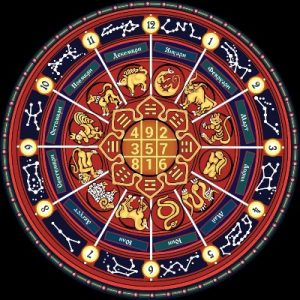
Why is the number 12 special? We have 12 months in the year. In addition, 12 is the balance of the cosmic order in vertical and horizontal: down-earth-up (vertical, three) and east-west-north-south (horizontal, four). In addition, we have four seasons, each with three months, and in the Proto-Bulgarian calendar, the Order in Space and in nature and the Order in society are always balanced.
There are 12 Black Fridays in the calendar of the ancient Bulgarians. They usually fall before major holidays. One of the main prohibitions is that women should not work. If the prohibition is not observed, diseases and misfortunes will visit the house. The number 12 is not accidental, it is sacred in many religions and beliefs. In the Old Testament, Jacob has 12 sons, from whom the 12 tribes of Israel originate. Jesus has 12 Apostles (as if he is the Sun, and the apostles are the 12 signs of the zodiac). Heavenly Jerusalem has 12 gates with 12 angels.
Here are the Black Fridays of the year - they are black because on each of the days something extraordinary (bad in most cases) happened, marking not only our but also the world's religious history:
– Friday before Todorov Day, when Adam was expelled from Paradise
– Friday before the Annunciation, when Cain kills Abel
– Good Friday, when Jesus was crucified
– Friday before Pentecost, when the Agarans capture Alexandria
– Friday before the birth of John the Baptist – then Jerusalem was captured
– Friday before Pentecost, when God gives the Egyptians frogs and turns the water in their rivers into blood
– Friday before the Assumption of the Virgin Mary – then Gideon wins
– Friday before Pentecost, when King Herod kills John the Baptist
– Friday before Easter, when the city of Sodom was captured
– Friday after Easter, when Moses parted the Red Sea and led the Israelites fleeing Egypt
– Friday before St. Andrew’s Day – then the Angel of God appears to Moses
– Friday after Christmas, when King Herod orders all the baby boys to be killed
© 2023 Iliana Dechkova
… to be continued