Traditions and symbols in Bulgarian folk costumes

The first hierarchy is found in the family. From there comes the order that does not waver. Therefore, the family as a form should not be lightly disregarded, because it is a living thing that jealously guards its status quo. Without order, the family is not possible, and hence it is not possible to continue the Kindred, the People, the Nation. Nothing can…

COUNTING TIME IN THE OLD BULGARIANS - part 1

    From "Once upon a time - manners and worldview of the Bulgarians" Since ancient times, people have been afraid of the natural elements. Nature was a mystery to them and the ancients deified it. With the development of civilizations, many gods appeared, guardians of the various natural elements, which instilled terror in the early Christians as well. They also thought...

THE SELF-DIVES - WERE THEY EVER?

The new collection of the publishing house "Thracian Press" is out. I am honored and pleased to have my work included. ORIGIN AND SIGNIFICANCE OF THE CONCEPT The first written records of samodives date from the 13th century. It is believed that the myths about them were born in the Balkans, and traces of Slavic antiquity are also found. The words SAMODIVA and SAMOVILA have Indo-European roots...

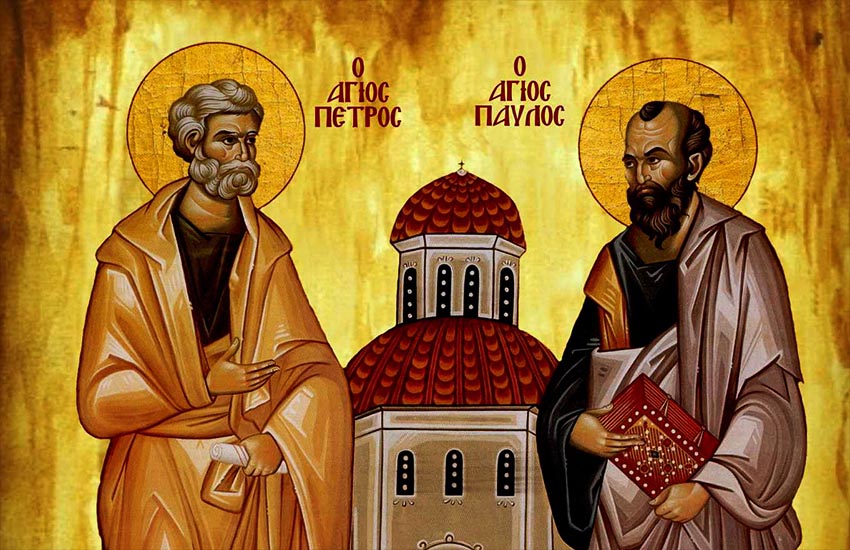
St. St. Peter and Paul – June 29 and 30

From "Once upon a time - manners and worldview of the Bulgarians" (see in the Shop) On this day, the church honors the memory of the Holy Apostles Peter and Paul. Both the Catholic and Orthodox churches honor them together and consider them the pillars of Christ's teaching and some of the most zealous followers of Jesus. Christian Legends Peter's birth name was Simon. He…

Legend of Baba Marta

Old legends say that the months of the year were living beings. Baba Marta was the sister of Golyam Sechko (January) and Little Sechko (February). The brothers drank the wine every year and didn't leave it to her, that's why Grandma Marta is still hot and sour. That's why people keep trying to appease her, because her mood influenced...

Legends of the Martenitsa

Legend of the martenitsa – 1 One of the legends about the origin of the martenitsa is related to Khan Asparuh and the creation of the Bulgarian state beyond the Danube. According to legends, when the Bulgarians reached the Danube plain, fascinated by the place, they decided to settle right here. The chief announced the newly created state and, as is his turn, decided to make a sacrifice...

Symbolism of the Martenitsa

The first martens, with which people fastened themselves and cattle, were only made of red woolen thread. It was a kind of amulet that protected against all kinds of evils and brought health, fertility and luck. In later times, people also twisted white, again from wool, into the red thread. In addition to wool, to make martenitsa you can ...

Symbolism in our folk art - Stopan

Each house has its own patron, called the owner, domvik or saibiya. It is a house spirit, considered by some to be the spirit of a deceased loved one. It was believed that he was so attached to his home and heirs during his lifetime that after his death he remained in the family house, watching over and caring for...

The folk instruments - chan, gudulka, tambourine

Chan Percussion musical instrument of the group of bells. It has a conical shape. It is used in Bulgarian folklore, in the dances of the kukeri and as a signal instrument for domestic animals. A series of many vats is called a duzia. It is very characteristic of the Rhodopes. In a dozen chans, the lowest ones are called "kaba" and the highest ones are called "juritsi", after the two types...

Folklore regions in Bulgaria - Shop region

Our country is small in terms of territory, but it gathers seven folklore regions, each unique for itself with its own specific features in terms of clothing, music, songs and dances. The Shop folklore region stretches across Central Western Bulgaria. It includes the western part of the Central Highlands (Sofia field and Vitosha) and the Bulgarian regions of...